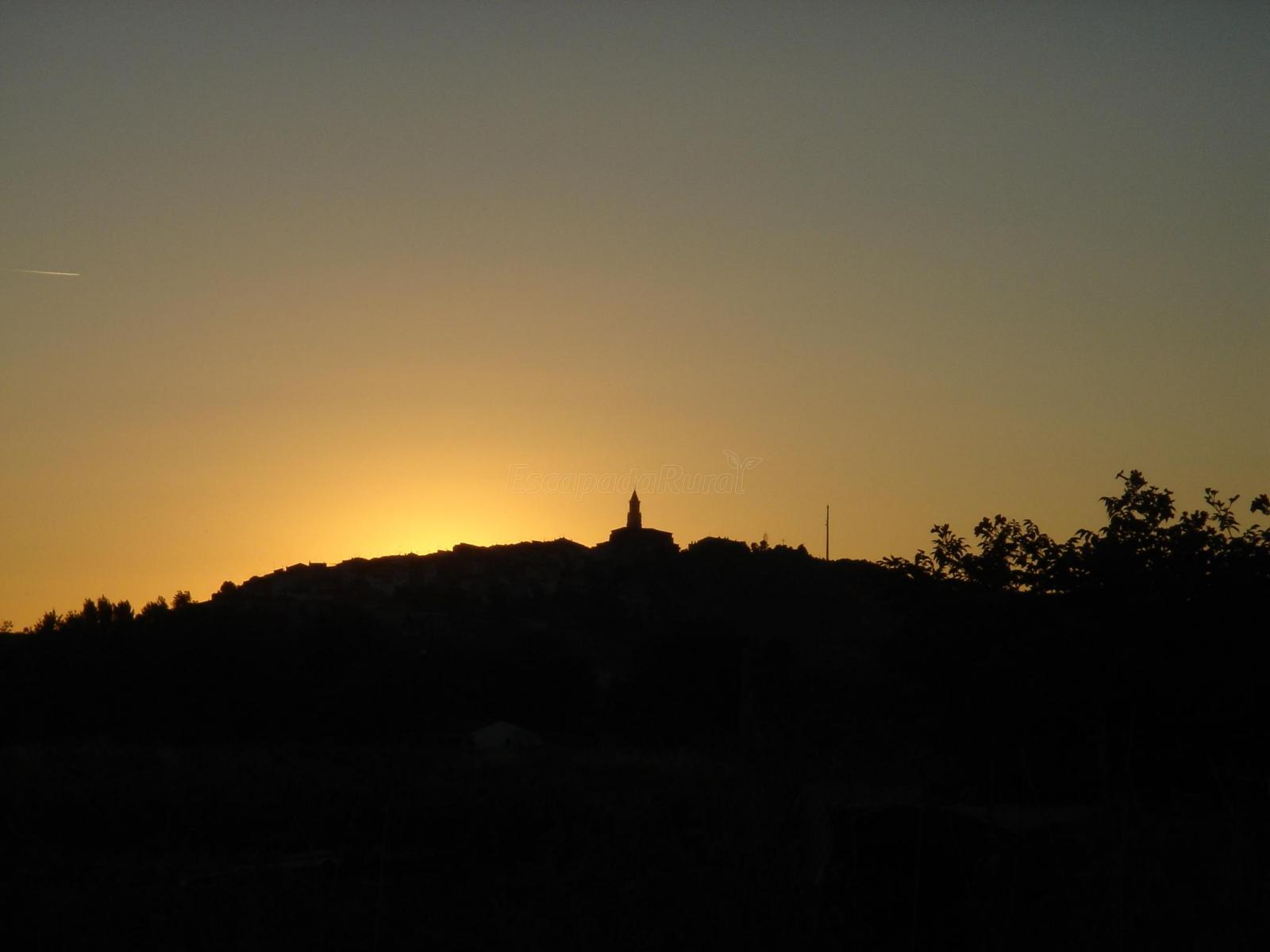
Carcar, officially the City of Carcar (Cebuano: Dakbayan sa Carcar; Filipino: Lungsod ng Carcar), is a component city in the province of Cebu, Philippines. According to the 2020 census, it has a population of 136,453 people.
History
Carcar was known as "Kabkad" or "Sialo" before Spanish colonization. It became a town in 1599. Carcar is considered one of the oldest towns in Cebu, with its Spanish influence lasted more than 300 years ago.
World War II and the Koga papers
In early April 1944, fishermen Pedro Gantuangko and Rufo Wamar, both residents of Carcar, discovered a wooden box floating off the coast of San Fernando, Cebu after they were alerted to the crash of a Japanese plane at sea. Upon retrieving the box from the shore, they discovered a water-soaked portfolio containing various Japanese-language documents, which they dried for the next two days and kept hidden from Japanese authorities. Gantuangko eventually handed over the documents to local guerrillas, with the papers soon reaching Lt. Col. James M. Cushing. Japanese military officers murdered numerous civilians in their persistent search for the documents, with both Gantuangko and Wamar separately fleeing to Bohol to hide from authorities.
The documents, later named the "Koga papers" after General Mineichi Koga, were picked up by the American submarine USS Crevalle in Negros Oriental and sent to Brisbane, Australia, where it was discovered by General Douglas MacArthur to contain plans called Operation Z that revealed the Japanese' tactics in the Pacific theatre. The papers soon proved crucial to the forming of the Allied plan to liberate the Philippines, pushing the planned Allied invasion of the country to October 1944, two months ahead of schedule.
Cityhood
In July 2007, the municipality of Carcar was converted into a component city of the province of Cebu after ratification of Republic Act 9436.
On November 18, 2008, Supreme Court ruled that the cityhood charters of Carcar and 15 other cities as unconstitutional as a result of a petition filed by the League of Cities of the Philippines. A year later, on December 22, Carcar and 15 other municipalities regained their status as cities again after the court reversed its November 18, 2008, ruling. On August 23, 2010, the court reinstated its ruling on November 18, 2008, causing Carcar and 15 cities to revert to municipalities. Finally on February 15, 2011, Carcar and the other 15 municipalities regained their cityhood status.
In 2013, after a six year legal battle, the League of Cities of the Philippines acknowledged and recognized the cityhood of Carcar and 15 other cities on July 19, 2013.
Geography
Carcar City is bordered to the north by the town of San Fernando, to the west are the towns of Barili and Aloguinsan, to the east is the Cebu Strait, and to the south is the town of Sibonga. Carcar is 40 kilometres (25 mi) from Cebu City, 23 kilometres (14 mi) from Barili, and 26 kilometres (16 mi) from Aloguinsan. It has a land area of 116.78 square kilometres (45.09 sq mi).
Carcar lies on the southernmost part of Metro Cebu area.
- Topography
The land is generally level with less than 18% slope comprising 78.7% of the total land area. Areas with slopes ranging from 18 to 50% cover 19.3% of the total land area and those over 50% slope comprise approximately 1.9%. The highest recorded elevation is a little over 660 metres (2,170 ft) above sea level, located within the barangay of Napo.
- Soil type
The municipality has five dominant soil types namely: Faraon Clay, Steep Phase, the Lugo Clay, the Mandaue clay loam & the Hydrosol type.
Barangays
Carcar is politically subdivided into 15 barangays. Each barangay consists of puroks and some have sitios.
Climate
The wet season occurs during the months of May to October and the dry season, from January to May.
Demographics
Economy
Poverty incidence of Carcar
Tourism
- As a heritage city of Cebu, Carcar contains various Spanish and American period structures. The Carcar plaza alone hosts several heritage structures, the Church of St. Catherine of Alexandria dominates the area. Within the complex various structures stand, including quaint houses and their distinctive architectural details.
- Surrounding the Rotunda and in the public market one will find the famous Carcar chicharon, lechon, ampao, bucarillo, gorgorias and puso – just some of the local delicacies.
- Guadalupe Mabugnao Mainit Hot Spring National Park
- Heritage Houses such as the Mercado Mansion
- Tuyom Beach – Beach Houses
- The Kabkaban Festival, which is the town's local festival in honor of St. Catherine of Alexandria. The name of the festival comes from the old name of the town, which was taken from the local term for the Oakleaf Fern (Aglaomorpha quercifolia) which is abundant in the town, even to this day. Celebrated from the November 23 to 25, it highlights the rich culture, faith, and musical history of Carcar.
Education
The public schools in Carcar are administered by the Schools Division of Carcar City.
Elementary schools
High schools
Integrated schools
- Puesto Integrated School — Sitio Puesto, Napo
- Sacsac Integrated School — Sacsac, Calidngan, Carcar City
Colleges
- Carcar City College — P. Vasquez St., Poblacion I
Notable personalities
- Teofilo Camomot – founded the Congregation of Blessed Virgin Missionaries
- Sheryn Regis – singer
Gallery
References
Sources
External links
- Media related to Carcar at Wikimedia Commons
- Carcar travel guide from Wikivoyage
- Philippine Standard Geographic Code